
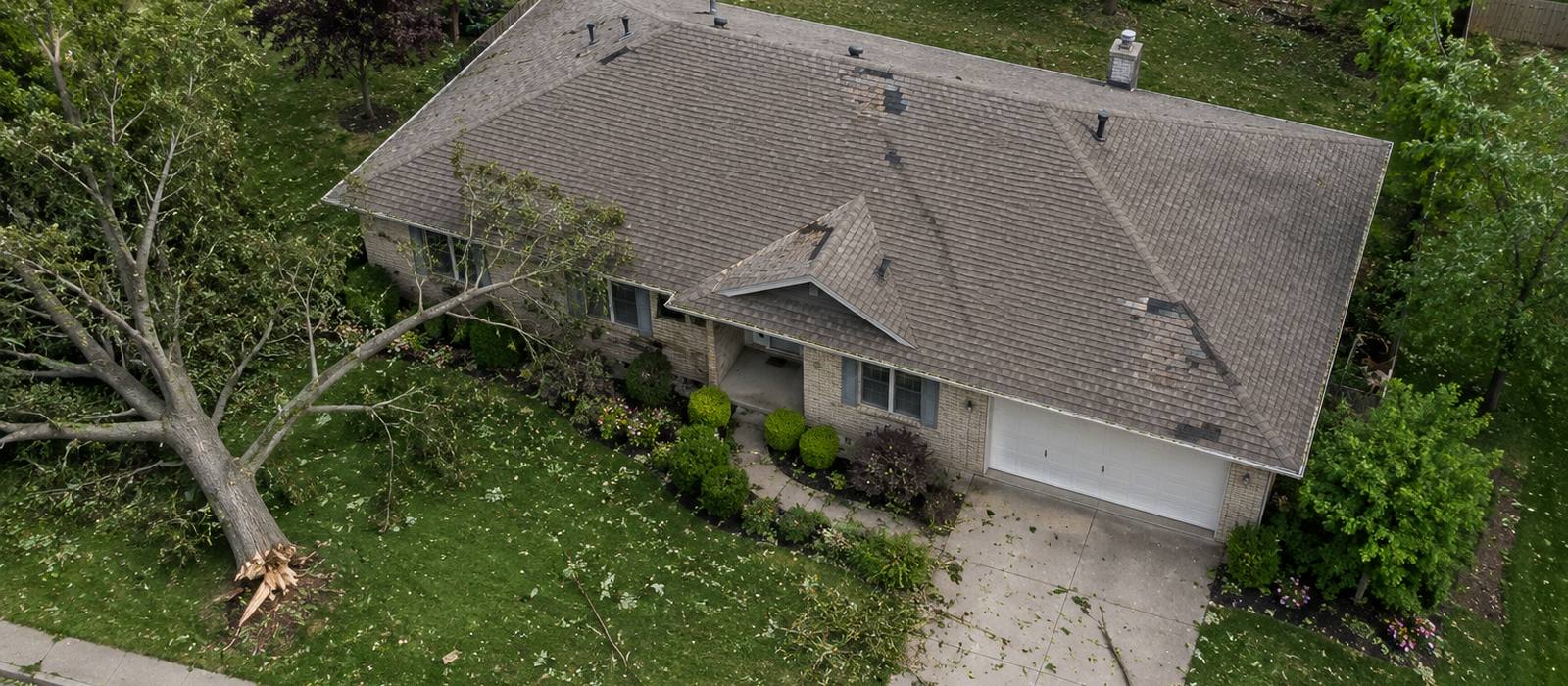
How Wind Damages Roofing
Wind creates uplift pressure at the edges and ridge of a roof. Most roofing failures from wind start at the perimeter — the first course of shingles, the rake edges, and the ridge cap — before progressing inward. High winds can also break the factory-applied sealant strips between shingle courses, allowing shingles to lift and create gaps even when no shingles are visibly missing.
Signs of Wind Damage
- Missing shingles: The most visible sign. Missing shingles expose the underlayment and eventually the deck to water infiltration.
- Lifted or creased shingles: Shingles that have been lifted by wind may fall back into place but no longer seal properly. They're vulnerable to the next wind event and to water infiltration at the creased point.
- Damaged or missing ridge cap: Ridge caps sit at the peak of the roof and take the full force of wind. Missing or cracked ridge shingles are a common result of high winds.
- Flashing damage: Step flashing, pipe boot flashing, and edge metal can be bent, lifted, or torn loose by wind, creating water entry points at transitions.
- Soffit and fascia damage: Wind-driven debris and high uplift can damage soffit panels and fascia boards along the eaves.
Functional vs. Cosmetic Wind Damage
Insurance policies typically cover wind damage that affects the function of the roof — shingles that are missing, lifted in a way that allows water entry, or damaged to the point that they no longer protect the roof system. Purely cosmetic damage (minor scuffing that doesn't affect performance) may not meet the threshold for a covered claim.
We assess damage honestly and tell you what we think is functional vs. cosmetic. We don't inflate findings to create a claim.
Why Wind Damage at the Ridge and Edges Is Often Missed
A quick visual inspection from the ground or from a ladder at the eave doesn't reveal what's happening at the ridge or on steep-slope sections. We get on the roof and walk every area. Wind damage to ridge cap shingles, broken sealant strips, and lifted sections on upper slopes is routinely missed in inspections that don't involve actually walking the roof.
Free Wind Damage Inspection
We inspect the full roof after any significant wind event and give you a written report of findings. Call (317) 883-7537 or use the form to schedule.