
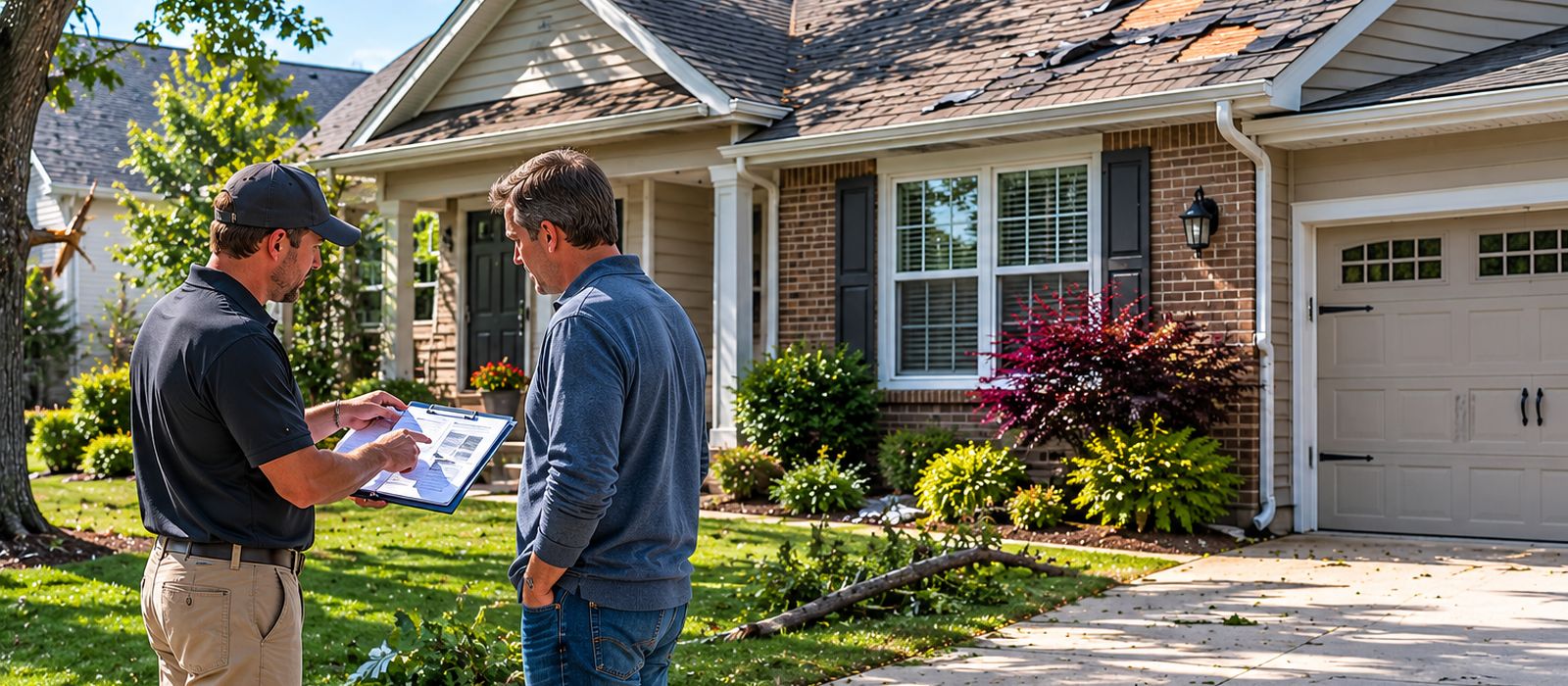
Filing a roof insurance claim without knowing whether you actually have covered damage is one of the most common mistakes homeowners make after a storm. A denied claim goes on your record and can affect your rates. Getting an inspection before you file is always the right first step.
Step-by-Step: The Roof Insurance Claim Process
Step 1: Get a Professional Inspection First
Before you call your insurance company, have a licensed contractor inspect the roof. We'll document what we find and tell you honestly whether the damage looks like a viable claim. This gives you a clear picture before you start the process and a written report to support your claim if you proceed.
Step 2: Review Your Policy
Two key policy provisions affect your payout significantly:
- ACV (Actual Cash Value): Your insurer pays the depreciated value of the roof — meaning what a 15-year-old roof is worth today, not what it costs to replace it. The depreciated amount is withheld until repairs are completed (or sometimes permanently withheld).
- RCV (Replacement Cost Value): Your insurer pays the full cost to replace the roof with materials of like kind and quality. You receive an initial payment minus your deductible, and the "recoverable depreciation" is released after the work is complete.
Know which you have before you file.
Step 3: File the Claim
Contact your insurance company to open a claim. Have your written inspection report ready. Note your claim number and the adjuster's contact information.
Step 4: The Adjuster Visit
Your insurer will send an adjuster to inspect the roof. We can attend this inspection as your contractor representative — walking the roof with the adjuster, pointing out documented damage, and ensuring all affected areas are included in the scope. This matters: adjusters work for the insurer, not for you, and having your contractor present produces a more complete scope.
Step 5: Review the Insurer's Estimate
Once the adjuster's scope is issued, review it carefully. It should cover all damaged areas at current material and labor costs. If the estimate is missing items, uses wrong material specifications, or is priced below current market rates, a supplement can be filed. We've navigated this process many times and can review the estimate with you.
Step 6: Work Begins
Once the scope and pricing are agreed, we complete the work per the approved scope. For RCV policies, we help you obtain the recoverable depreciation release from your insurer once the project is complete.
A Note on Supplements
It's common for the initial insurer estimate to miss items or underprice the scope. Supplementing is a normal, legitimate part of the process — not a confrontation. We handle supplement negotiations directly with insurers and work to ensure the approved scope covers the full cost of a proper repair.
Call (317) 883-7537 to start with a free inspection, or use the form. We'll walk you through the rest.