
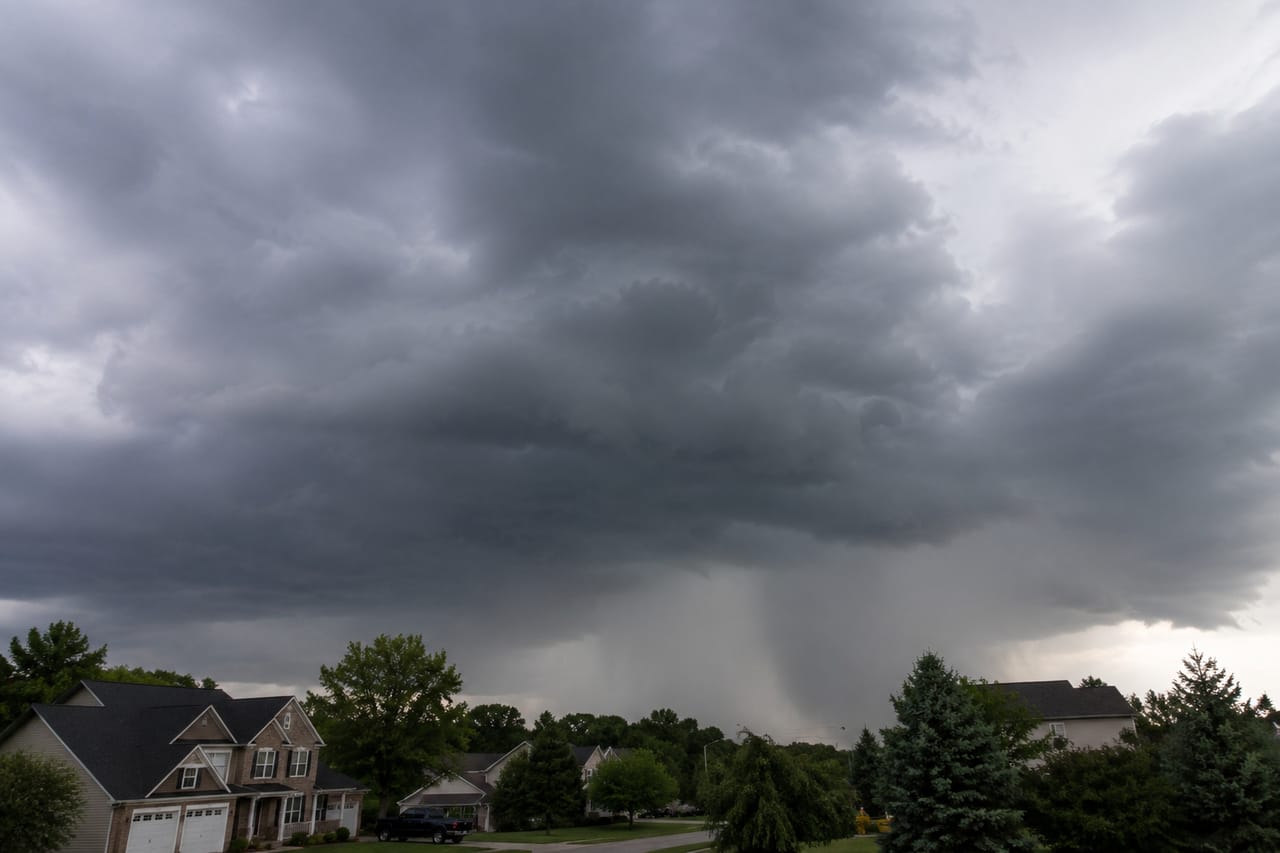
If you’ve lived in central Indiana for any length of time, you know the spring and summer storm season isn’t gentle. Hail the size of marbles, straight-line winds pushing 60 to 70 mph, heavy rain that arrives fast and sideways. Indianapolis weather is hard on roofs, and the damage doesn’t always show up where you’d expect it.
What Indianapolis Storms Actually Do to a Roof
The three biggest threats during storm season in central Indiana are hail, wind, and water. Each causes a different kind of damage.
Hail is the most common cause of roof insurance claims in Indiana. Even hailstones under an inch can knock granules off asphalt shingles at impact, leaving soft spots that don’t shed water properly. Larger hailstones can crack or puncture shingles outright. The damage is often invisible from the ground, which is why so many homeowners don’t know their roof took a hit until a leak shows up months later.
Wind lifts shingles at the edges and tabs, breaking the seal strips that hold them flat. Once a shingle is loose, the next rain event can push water underneath it. High winds also send debris, branches, gutters, and equipment from neighboring buildings crashing into roofing surfaces, causing dents and punctures that compromise waterproofing.
Heavy rain by itself isn’t usually what damages a roof. It’s what finds the gaps that hail and wind already created. Sustained rain and flash flooding can overwhelm gutters, push water back up under drip edges, and expose any weakness in flashing around chimneys, vents, or skylights.
The Indianapolis Storm Window
Central Indiana’s peak storm risk runs from roughly April through September, with the most active stretch in May, June, and July. That’s when warm Gulf moisture, cold fronts from the north, and the instability of the Great Plains weather pattern combine to produce the severe thunderstorms and occasional tornadoes that make Indiana a regular feature on weather radar.
What that means practically: if your roof has any existing vulnerability, aging shingles, compromised flashing, loose gutters, storm season is when it’s going to get found. Roofs that might have held on through a mild spring can take significant damage in a single strong storm.
How to Check Your Roof After a Storm
You don’t need to climb a ladder to get a reasonable picture of what happened. Here’s a quick ground-level checklist:
- Walk the perimeter and look for shingles or shingle granules on the ground or in the gutters. Either is a sign of impact damage.
- Check your gutters and downspouts for dents. If hail was big enough to dent aluminum gutters, it almost certainly affected your shingles.
- Look at the roof surface from the ground using binoculars if you have them. You’re looking for dark spots, missing tabs, or shingles that are lifted or out of alignment.
- Check your attic within 24 to 48 hours of a major storm. Look for daylight coming through the decking or any new water staining.
- Look at soft metal surfaces: gutters, downspouts, window screens, and A/C units. Hail leaves obvious marks on these and is a reliable indicator that your roof took hits too.
If you see any of these signs, get a professional inspection scheduled before the next storm arrives.
Repair vs. Insurance Claim: What to Know
Storm damage to your roof is typically covered under your homeowners insurance policy, but how you handle the process matters. A few things worth knowing before you call your insurer:
Document everything. Take photos from the ground, note the date of the storm, and keep records of any temporary repairs you make to prevent further damage.
File promptly. Most policies require you to file within a reasonable time of the damage. Waiting months can complicate your claim.
Get an independent inspection first. Before your insurance adjuster visits, it’s worth having a roofing contractor assess the damage. Adjusters are thorough, but they sometimes miss damage that an experienced roofer looking at hundreds of roofs a year would catch immediately.
We work with insurance claims regularly and can help you understand what’s covered, what documentation you need, and what the repair or replacement process looks like from start to finish.
The Best Time to Get Ahead of Storm Damage
Before storm season starts. A spring roof inspection, typically March or April in the Indianapolis area, catches the issues that winter freeze-thaw cycles create and makes sure your roof is solid heading into the riskiest months. If you missed the spring window, getting an inspection after any significant storm event is the next best move.
Minor issues caught early, like a cracked shingle, loose flashing, or a gutter pulling away from the fascia, are inexpensive fixes. The same issues left unaddressed into fall or winter become water infiltration problems that can damage insulation, framing, and interior finishes.
We’re Here to Help
Storm damage roof repair is one of the most common calls we get at Simple Roofing, and our team responds quickly. If you’ve had a recent storm and want someone to take a look, give us a call at (317) 883-7537. We’re available Monday through Saturday, 8am to 8pm, and same-day inspections are often possible after major weather events. Free estimates always. You can also reach us at simpleroofingllc.com.